
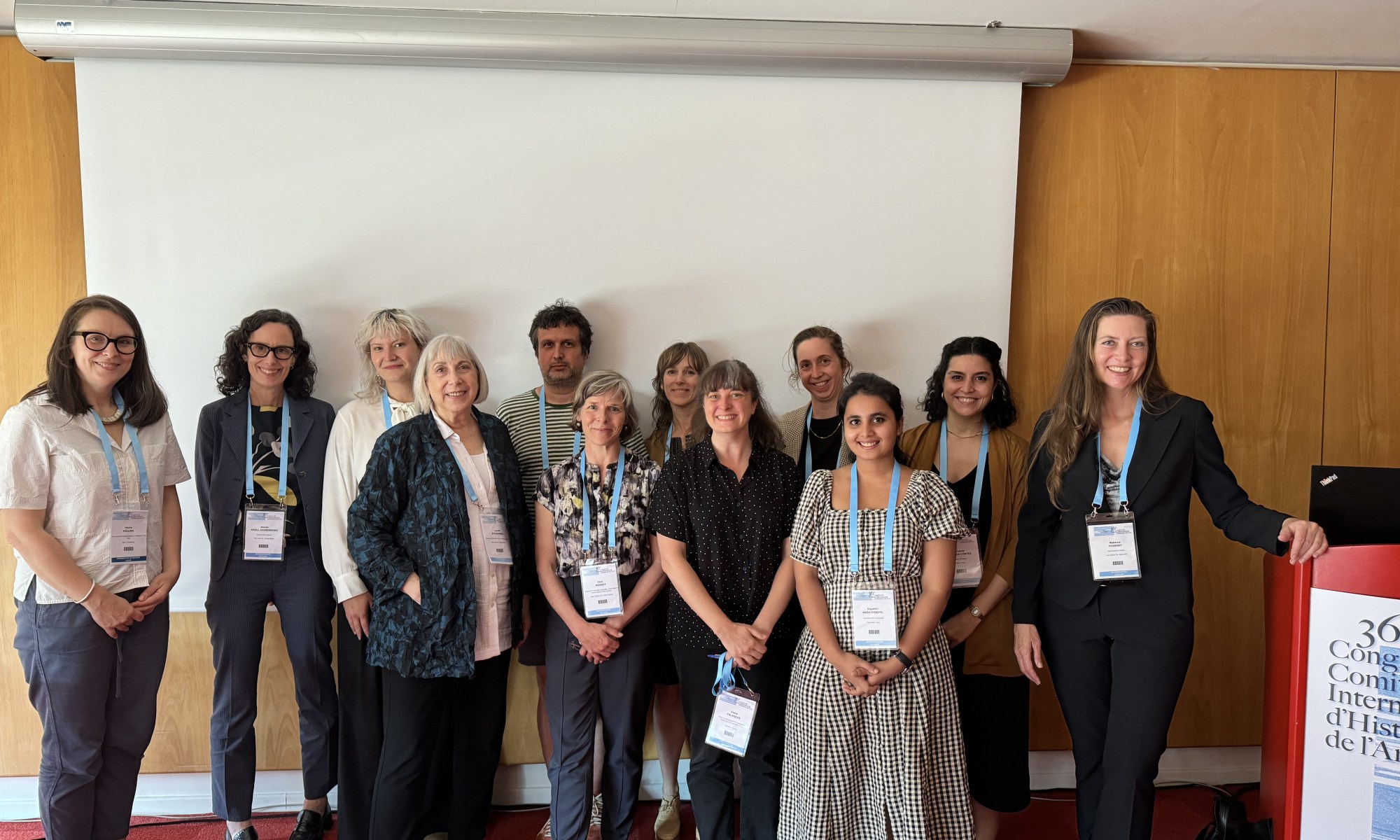
Megan Metcalf, an assistant professor at New Mexico State University and our project’s associated researcher, shares her first-hand impressions from the two sessions our project team organized and moderated at the 2024 Congrès International du Comité International d’Histoire de l’Art (CIHA) in Lyon, France. The sessions focused on the theme of “Matière Matérialité / Matter Materiality.”.
Hello! I’m guest-reporting for “Performance: Conservation, Materiality, Knowledge” (PCMK) from the 2024 Congrès International du Comité International d’Histoire de l’Art (CIHA) in Lyon (CIHA) in Lyon, France, where I had the privilege to help moderate two knockout panels that exemplified how the field of conservation is changing in response to performance. Expertly organized by Jules and Emilie (who are away on family leave) and carried forward on the ground by Andrej and Hanna, the mix of papers and presenters embodied a central PCMK ethic eliciting conservation knowledge from all kinds of experts. The dynamic, illuminating speakers located performance (and for that matter, conservation) in unexpected places—from material remnants to an audience’s movements to an exhibition’s design, for example—thereby expanding the practical and theoretical possibilities of each.

The first panel began with a kind of re-performance: Naomi Kroll Hassebroek and Lynda Zycherman took a dialogic approach to their presentation on Yve Laris Cohen’s Studio/Theater, a live performance that proceeded the same way when it appeared at the Museum of Modern Art in New York (MoMA) in late 2022. Presented in two parts, I was lucky to see both in 2022—and luckier still to witness in Lyon the author-performers’ candid thoughts and expert observations about the experience. Naomi, an architectural conservator with the US National Park Service, and Lynda, a senior sculpture conservator at MoMA, are not typical theatrical performers but were pressed into unusual service by Laris Cohen’s project, which explored some of the junctures (and dis-junctures) between the paradigms of “preservation” in dance and “conservation” in visual art. Although key material remnants of Cohen’s performance have since been lost, the conservators’ presentation (prepared together with Laris Cohen and Michele Marincola) continued some of Studio/Theater’s conceptual work for a new audience.
Likewise, art historian Gayathri Andathodiyil’s talk continued the work of the late Rummana Hussain (1953-1999) by way of a discussion of the few relics that remain from her 1990s performances. Gayathri presciently pointed out the limitations of textual and photographic sources while relating them to the poignant loss of the artist’s body, both during her lifetime due to illness and once she passed on. I was struck by the sense of an aesthetic and scholarly inheritance, which presents both possibility and responsibility for a new generation of scholars and curators encountering Hussain’s haunting work for the first time. The first panel closed with scholar-practitioner Sara Wookey relating her process of transmitting Yvonne Rainer’s Trio A (1966) within her broader experience of museum- and gallery-based dance projects. The talk conveyed the intimacy and exactitude generated between the choreographer and “transmitter,” an in-depth exploration of precisely what “body-to-body transmission” consists of and how it might be used to generate new ethics and expectations for art institutions generally and conservation specifically.
Each speaker seemed deeply moved if not changed by their encounter with these artworks, prompting them to question, challenge, and re-direct the project of conservation. I wondered how they would define (and re-define) “conservation” under these circumstances, which they thoughtfully considered for the audience. Lynda indicated that her experience performing had put conservation into entirely new relief, one of the key insights of the PCMK project as a whole.
In the second panel, re-defining conservation gained even more urgency, with each of the speakers relaying moments of crisis that prompted both creativity and action. In the first two talks, pairs of museum and conservation experts grappled with disciplinary and institutional limitations as they endeavored to invent protocols for the acquisition, continuation, and transmission of performance in the museum context. Coming from disparate geographic and cultural conditions: Brazil in the first case (Fernanda Werneck Côrtes with Anna Paula Da Silva) and French public collections in the second (Claire Valageas and Clélia Barbut), both projects nonetheless sought to create frameworks that could account for the complexities of individual artistic works and creative practices but also be broadly applicable across museum collections and flexible for the future. Each group presented compelling case studies pressuring existing definitions and practices, along with ambitious and proactive solutions for the institutionalization of performance that can serve as examples nationally and internationally. The helpful graphs and schematics they prepared were eagerly photographed by the afternoon’s attendees.
Continuing the theme of collaborative knowledge production, Rebecca Peabody of the Getty Research Institute in Los Angeles (GRI) presented an example of institutions and individuals working together to preserve a dance legacy that initially seemed as fragile and fleeting as the VHS tapes it was recorded on. Faced with the Coronavirus pandemic and short on time, curators at the GRI, the dance division of the New York Public Library, the Black arts organization Art + Practice in Los Angeles, and the family of choreographer Blondell Cummings created an archive and an experience of Cummings’ work that will serve as a foundation for future art and dance scholarship. Critically, the choreography of the exhibition at Art + Practice functioned as a site of knowledge transfer, a conclusion also made about Simone Forti’s 1976 holographic work Angel in the final talk. In a discussion of the conservation challenges presented by Forti’s unusual artwork, which is both sculptural and imagistic, Markéta Krausová (in a paper co-authored with Evelyn Snijders) emphasized the importance of the conditions of its display. These must take into account the movements of the audience, without which Angel could lose essential meaning. Faced with the risk of damage on the one hand, and the work not being seen at all on the other, is the unpredictable, ephemeral, and embodied element of the audience something conservation will ultimately account for?
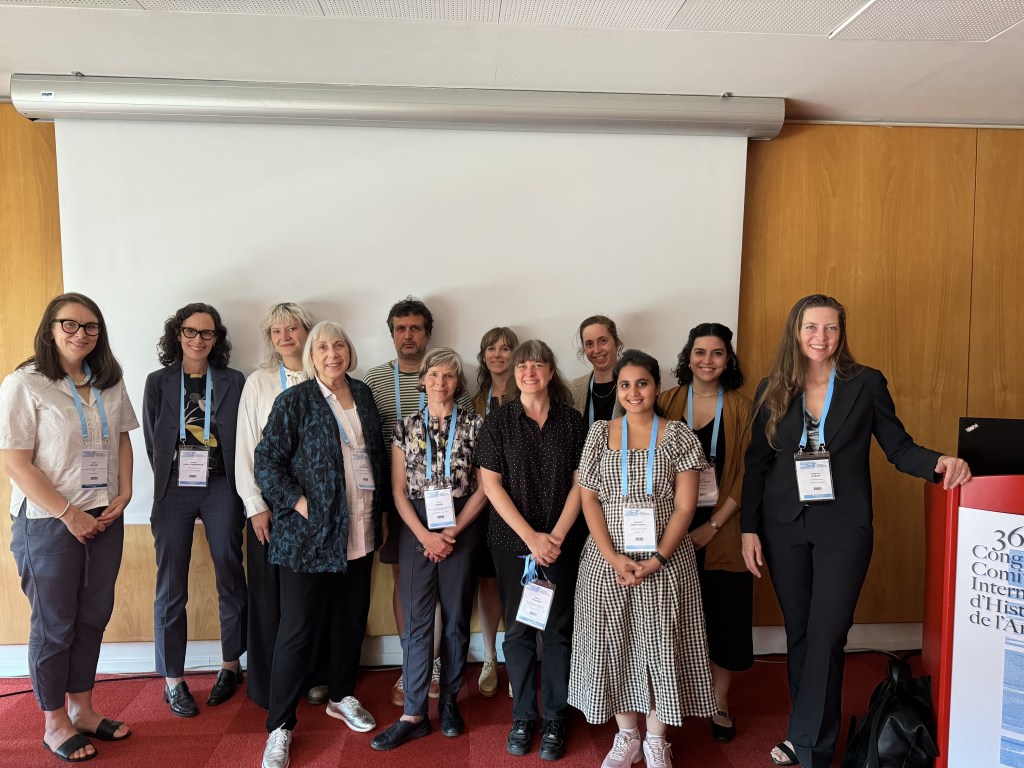
My overall impression from the talks and the questions from the audience was a resounding “yes”! Yes, conservation could and would accommodate all kinds of emerging materialities and their attending conceptual paradigms—and their challenges to the traditional operations of artworks. In the service of artists and artworks, conservation is in fact flexible and capacious, willing to learn and change to treat the ever-growing landscape of contemporary art. This is one of the critical lessons demonstrated by the CIHA conference overall—with its framework of “Matière Matérialité / Matter Materiality” that attracted so many papers from conservators—and by PCMK over its four years. As it comes to a close, the project exemplifies conservation’s expansion, which features people saying “yes” rather than “no,” asking questions, and reconsidering assumptions. And, as PCMK reveals the complexities and possibilities of conserving performance, it also gestures towards other conservation frontiers. What’s next?
If you are interested in the recordings of these sessions for research purposes, please contact us at performanceconservation@gmail.com.
 Performance: Conservation, Materiality, Knowledge