
When we endeavor to preserve a work of art, what exactly are we preserving? What does it mean to preserve, and how can an artwork be understood in the context of its preservation? How does the preservation of a traditional artwork differ from that of performance? And to what extent is any work of art a creature of its context?
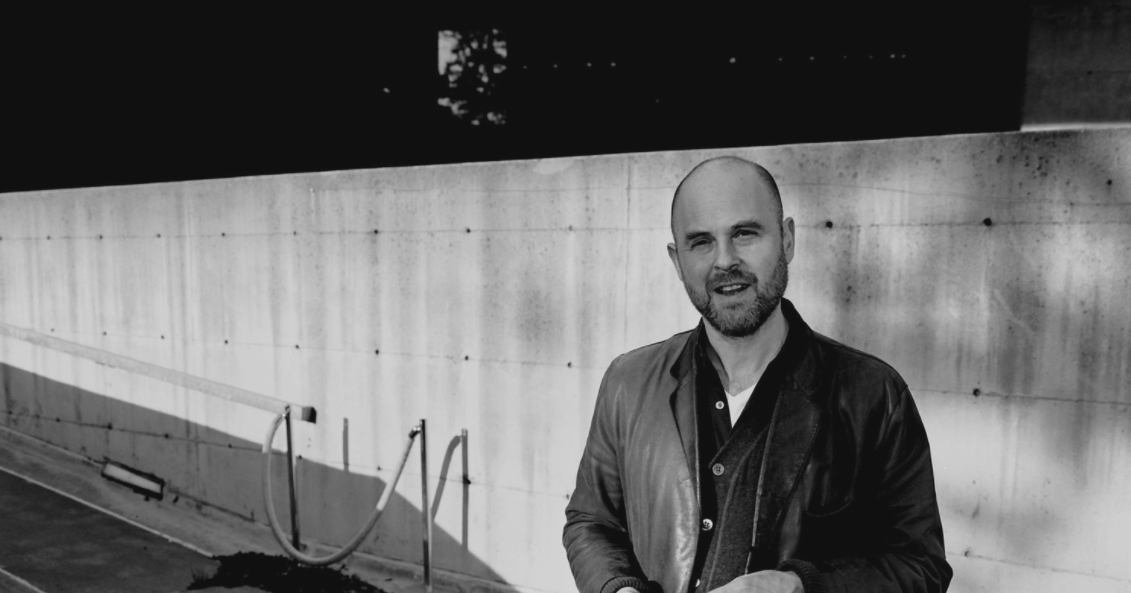
In what follows, I think with and through the ideas of Alva Noë, philosopher and Professor of Philosophy at the University of California, Berkeley.[1] Noë’s research spans the theory of perception and consciousness, cognitive science, and the philosophy of mind. He also engages with the theory of art, analytic phenomenology, and has a strong interest in the work of Ludwig Wittgenstein and in enactivism. What follows is a brief insight into Noë’s thinking, which provides fertile ground for interrogating both conservation and its “object.”
Caring for a painting or a sculpture requires caring for its material substrate. But how do we assess what maintaining that physical substrate truly entails? When the material changes by its very nature, the question becomes vastly more complex. Often, the care for the material substrate—deemed synonymous with the artwork’s preservation—results in depriving the work of its initial vitality, or what I elsewhere call its changeability. Such care may suppress the artwork’s otherwise vital, mutating, and unfolding character, as well as its dynamic relationship to the world.
According to Noë, we must recognize a distinction between the substrate we preserve and the real work, which unfolds in our engagement with it—in the curiosity we bring to building a relationship with the work. This distinction marks a critical and intriguing conundrum of contemporary conservation. While highly skilled technical intervention is often necessary, the techniques involved in physically salvaging a work must not dominate—neither our perception nor the work itself.
Physical salvage is always partial, temporary, and contingent on what we know, as well as how we are able to enact that knowledge in a specific context and present moment. It should always be understood in relation to the larger work. If we fail to situate the physical intervention within this broader context, we risk transforming the artwork into a decontextualized prop.
For Noë, it is the dynamic performance—of the audience and of the work’s participants—that constitutes the real work. In this, he follows the American pragmatist philosopher John Dewey, who argued that the physical object can obstruct our experience of an artwork. Instead, Noë maintains, we must do the work ourselves: we must activate the artwork—we must perform it. This “doing” is twofold, involving both our investment in the creation of the work and the physical and mental labor required to bring it into being through performance.
In traditional visual arts, the artwork is often associated with the material object that hangs on a wall or is positioned within a gallery space. The value attached to such physical objects—both as commodities and as investments—is a factor that should not go unmentioned. Because, at first glance, performance art appears to be the least objectual and least concrete of the arts—it lacks an object to hang on the wall—it is commonly believed to differ fundamentally from visual art. A closer examination reveals, however, that both visual art and performance share a proclivity toward materiality and residue, whether textual or objectual.
Contrary to claims that assume the immateriality of performance due to its evanescence, performance is—and can only be—material. It takes place in real space—architectural, bodily, technical, and cultural—and in real time. Although performance does not reside in physical objects alone, it is nonetheless embodied; it exists in and as the performer’s physical body, whether biological, robotic, or otherwise.
The paradox of performance lies in its fluid character, which inheres not only in the event itself, but in the fleeting exchange between the ephemeral and the material—between bodily incarnations and the physical residue that stands in for the event in its absence. Whereas traditional art may lull us into an illusion of fixity through its object-character, performance reminds us that art is, at its core, an experience: something unfixed, fluid, changing, and impermanent.
Against the traditional binary of permanence versus impermanence, I have propsoed elsewhere that all art can be understood as changing and transitory—only at different paces. In other words, rather than a distinction between the permanent and the impermanent, we encounter varying durations or intensities of impermanence. An object might be seen as a slowly unfolding event; an event, as a rapidly occurring object.
The impulse to preserve intensifies in event-based artworks. In his research within the framework of the Forsythe Company—a Dresden-based dance ensemble founded by artist and choreographer William Forsythe—Alva Noë observes that one aspect of choreographic work is never fixed but inherently ephemeral and subject to tremendous variation. Alongside this transitory element, however, exists another dimension: a drive to document, to record, to notate the choreography in a multitude of ways. Noë understands this impulse to preserve not as reactive, but as creative—a way of being with the artist.
The Forsythe Company’s investment in appropriate technologies for documentation is evident in their meticulous recording of conversations and comments during rehearsals. This practice has generated a vast body of archival recordings—a “superstructure of thought and image, of self-representation, in terms of which to comprehend this otherwise apparently liquid and vanishing thing which is the thing these artists do” (Noë, April 2021).
Notably, these documents do not recede into an archival vault. Instead, they become scores for new performances—working tools within the creative process. Thus, to create and actively engage with documentation is not merely an act of preservation, but one of creation. The ensemble’s preservative work is itself a form of making and adapting the piece—shaping how it is performed on stage and how it is received by audiences.
One more observation can be made: the means we have of representing ourselves to ourselves change us. This, according to the philosopher, is a basic fact about culture in general. Whether it is the way writing affects speech, pictures affect visuality, or ideologies shape our experience of our bodies (see Noë’s Strange Tools, 2015), these representational tools reconfigure how we engage with the world and ourselves. In this broader sense, what the conservator does is not merely technical—it is, at its core, a creative act.
But conservation is not a single, unified gesture; it has multiple moments. Forsythe, for instance, is both choreographer and conservator of his own practice. Similarly, a pigment analysis is only one moment—one aspect—of a much larger conservation task. This task cannot be separated from the broader operations of care and valuation—of the artwork, of ourselves, and, ultimately, of one another.
The exigencies of our discussion lead us to ask: What do we really need to do in order to conserve a work of art that does not inhere solely in its physical aspect? This is where context becomes crucial. Take, for example, a case from the natural environment. According to the American environmentalist David Brower—on whom Noë draws in his Clark lecture—the American condor, a vulnerable species, is constituted only in part by its physical body; the rest of the condor is its environment.
Such an environmentalist view is reminiscent of Dewey’s aesthetics, grounded in naturalism, according to which an organism—“the live creature”—is in constant interaction with its surrounding world. Dewey writes: “Life goes on in an environment; not merely in it but because of it, through interaction with it” (Art as Experience, 19, italics in the original). Similarly, for Noë, animals, everyday objects, and artworks are dynamic singularities whose activities are world-involving. They can only be located within their nexus to the broader world.
This insight carries wide-ranging implications for conservation: its objects are fundamentally embedded in the world and must never be isolated from it. Indeed, they might, in a profound sense, be their world. Dewey contends:
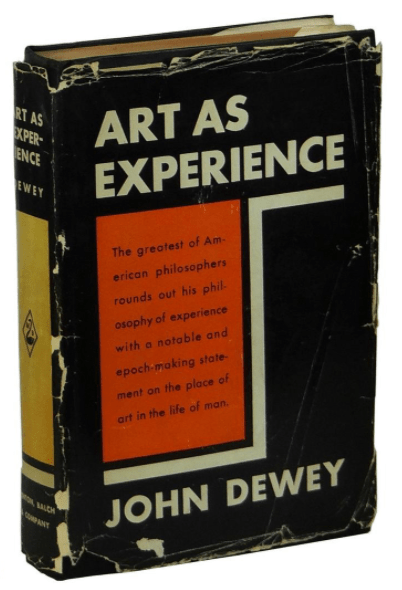
Mountain peaks do not float unsupported; they do not merely rest upon the earth. They are the earth in one of its manifest operations. It is the task of those concerned with the theory of the earth—geographers and geologists—to make this fact evident in all its implications. The theorist who seeks to philosophize about fine art has a similar task to undertake (Art as Experience, 4).
Like geographers and geologists, conservators—through their theoretical-practical engagement with artworks—must ensure that the world surrounding these works is not left behind but made evident. Too often, works placed in collections are withdrawn from their world (Heidegger); they remain as props or artefacts (from Latin arte, “by or using art,” and factum, “something made”). This is why Adorno draws a connection between a museum and a mausoleum, suggesting that the association between the two is more than phonetic (“Valéry Proust Museum,” 1967). One might, however, consider the museum as a site in which works establish novel relationships and adopt a distinct mode of being in the world.
But there is something else in this world-involving nexus that needs to be addressed. If we accept a world-involving understanding of the artwork, then we must also consider the audience and its multiple visions and perceptions. This is where the distinction between an anthropological object—say, a found object—and an art object, a creature of its context, may lie. Yet the sheer impossibility of accounting for all subjectivities and contexts renders the ideal of conservation as a total or definitive act inherently unattainable.
This limitation arises not only from the multiplicity of contemporary perceptions but also from the historically contingent nature of perception itself. The mental and visual apparatus brought to bear on artworks in particular times and places—the culturally constructed nature of vision, shaped by the sum of social and cultural practices that inform aesthetic experience—must also be part of the equation. Works of art were created for specific purposes, audiences, and spatiotemporal circumstances.
In his seminal work on the Renaissance, Michael Baxandall introduced the concept of the “period eye”—the set of conventional beliefs, values, prejudices, and superstitions presupposed by artworks and embedded within them. Great works of art often disrupt this background. Perhaps the true challenge lies in recognizing the disruptive force of such works when they appear to us today as foreign, anthropological objects. Conservation must remain aware of this problem.
I have considered this issue in relation to the notions of high- and low-level intentions proposed by the American philosopher Randall R. Dipert (see Paik’s Virtual Archive, 51). High-level intention concerns the effect of novelty or disruption a work is meant to have on its audience, whereas low-level intention relates to the specific means employed to achieve that effect. For example, a composer might have included a clarinet in the orchestra at a time when the instrument was still novel. Over time, however, the clarinet lost its aura of unfamiliarity. If subsequent performances adhere strictly to the composer’s low-level intentions, they would include the clarinet, as indicated in the score. But if greater weight were given to the high-level intention, performers might substitute another instrument capable of evoking a comparable sense of novelty or surprise in a contemporary audience.
But the artwork is never exhausted by the artist’s intention alone. As I argued in Time and Conservation (2017), conservation—understood as a temporal intervention into an artwork—does not simply intrude upon a pristine object bearing the evidence of the artist’s hand. Rather, the conservator encounters an amalgamation of influences, intentionalities, and actions of multiple actors involved in the life of the artwork—factors that extend far beyond the initial creative act, both spatially and temporally. Moreover, the artist creates within a shared space—one shaped not only by their own intentions but also by the expectations and perceptions of the public. The rhetoric and space of play, therefore, are always broader than what can be made explicit within the artwork itself.
This has important implications for conservation. Even when we activate a work at a temporal distance from its creator, we must remain aware that we are part of a lineage—one that stretches back through the audiences who engaged with the artwork in the past. Noë offers a compelling example: Michelangelo lives for us because of the audiences who experienced his work over generations, beginning in his own time. (Nota bene: in the vast majority of cases, conservation actions not only preserve but also add value to an artwork, affirming it as something worthy of our—and future generations’—attention.)
According to Noë, if we were to come upon one of Michelangelo’s masterpieces as a mere found object, it might not mean much to us. We are participants in a play of ideas, values, and emotions—through which something becomes a work of art. Of course, we can pick up a stone on the beach and relate it to our world. But an artwork becomes what it is because of the interpretive and relational work we do with it.
It seems, then, that to preserve a work of art is not to preserve artistic intention, but the conditions of possibility of a work. This includes the value inherent in all human (and non-human) creations. Because every act of conservation involves the preservation of certain values, conservation needs to be critical and reflective, and above all conscious not only of what it intentionally preserves but also of what comes along collaterally. Keeping a Picasso might just as well involve the upkeep of the memory of the artist’s specific habits or behaviours. Along similar lines, using Heidegger’s thought might imply a perpetuation of ideals that constituted a part of his reprehensive worldviews. Noë suggests that we might avoid these complications if we commit to a philosophical thought as a score. Every work of art provides “a movement score, .. a thought score, a feeling score, an argument score” (Noë April 2021). I understand such score in both traditional artworks and performance also as a requirement for an adaptation or an actualization to the present knowledge and intellectual-material techniques of conservation.
Finally, a short recourse to choreography, which in the common sense is understood as the art of arranging the movements of dancers for a performance, might allow to expand our view on this practice, and by extension, on conservation. Noë sees choreography as a reorganizing principle that allows us to reorientate ourselves. Put differently, choreography disorganises us; it is a reorganizational act.
Dance is like philosophy, philosophy does to our thought what choreography does to dancing; it allows us to look sideways, bracketing thoughts and doings, reorients us. … Philosophical reorientations, like choreographic ones, are productive. They change the way we think and change who we are (Noë, June 2021).
While theorizing art, Noë suggests, we bring the work into focus. We discuss, debate, weigh arguments—and in doing so, we change what we see. I propose that conservation, too, can be understood as a reorienting and reorganizing practice. It sparks conversations that reshape both what we see and how we see it. Rather than a purely anthropological artifact or merely an “art object,” the object of conservation invites us into a relationship with a lineage of active agencies—those who engaged with the artwork before us. If the conservation conversation can change what we see, might it also change who we are—not only as onlookers or through-lookers, but as co-creators of the liquid, ever-becoming work of art?
References
Dewey, John. Art as Experience. New York: First Perigee Printing, 1980 (1934).
Dipert, Randall R. “The Composer’s Intentions: An Examination of Their Relevance for Performance.” The Musical Quarterly, Vol. 66, No. 2 (April 1980): 205-218.
Hölling, Hanna B. Paik’s Virtual Archive: Time, Change and Materiality in Media Art. Oakland, CA: University of California Press, 2017.
—-, “Time and Conservation.” ICOM-CC 18th Triennial Conference Preprints, Copenhagen, 4-8 September 2017, edited by J. Bridgland. Paris: International Council of Museums (2017).
Leddy, Tom, and Kalle Puolakka. “Dewey’s Aesthetics.” The Stanford Encyclopaedia of Philosophy (Fall 2021 Edition), Edward N. Zalta (ed.). https://plato.stanford.edu/archives/fall2021/entries/dewey-aesthetics/.
Noë, Alva. “Conserving Ourselves / Creating Ourselves.” Presentation at the conference Conservation, Making, Art, History at the The Clark Museum/New York University Institute of Fine Arts, 8 April 2021.
—-, “Dance Incorporate.” Unpublished chapter for a book in progress, June 2021.
—-, Strange Tools: Art and Human Nature. New York: Hill and Wang, 2011.
[1] This reflection emerged from a conversation that took place on June 30, 2021, within the framework of the research project Performance: Conservation, Materiality, Knowledge. I have expanded it with a few considerations inspired by Noë’s eponymous presentation at the Clark Institute, delivered during a conference co-organized by The Clark and the NYU Institute of Fine Arts in April 2021.
 Performance: Conservation, Materiality, Knowledge